Hay Dryer Machine
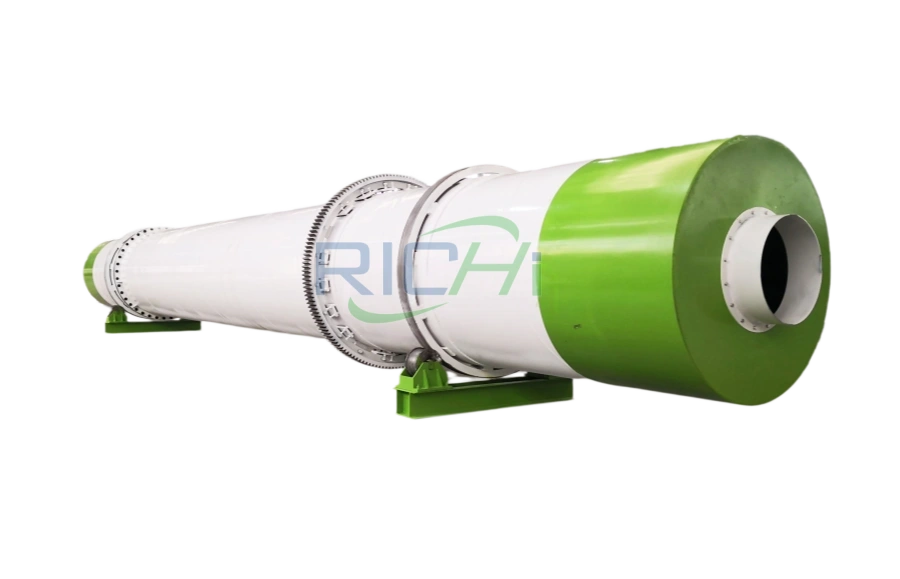
This hay dryer machine is an industrial drying device. It can quickly and evenly dry various types of forage and straw, making it suitable for feed processing or pelletizing applications. The equipment is designed for raw materials that have been unbaled or shredded. For high-quality feed processing, we also offer belt dryers. We can also provide customized dryers and complete drying systems.
- Drying Standard: Below 15–20%
- Production Capacity: 0.5–30 T/H
hay dryers Operation
The videos above demonstrate the actual operation of two types of hay dryers. The drum dryer offers high capacity and drying efficiency, making it the most commonly used equipment for industrial processing and hay pellet production. The belt type hay dryer uses a gentle drying method that helps preserve the shape and nutrients of the raw material. It is more commonly used in the production of high-end hay feed. This page will focus primarily on drum dryers. You can also click the button below to learn more about belt-type dryers.
Hay Dryer Machine Model Selection
We offer the following rotary drum hay dryer models to accommodate a wider range of production scales. The three-layer drum design is intended to save space. As RICHI’s technology advances, we will offer additional configuration options. The final equipment specifications can also be adjusted to meet your requirements.
| Model | φ0.6*6 | φ0.8*8 | φ1.2*12 | φ1.5*15 | φ1.8*18 | φ1.8*20 | φ1.8*36 | φ1.8*12*3C | φ1.8*24*3C |
| Diameter (m) | 0.6 | 0.8 | 1.2 | 1.5 | 1.8 | 1.8 | 1.8 | 1.8 | 1.8 |
| Length (m) | 6 | 8 | 12 | 15 | 18 | 20 | 36 | 12 | 24 |
| Number of Layers | 1 | 1 | 1 | 1 | 1 | 1 | 1 | 3 | 3 |
| Drum Speed (rpm) | 3~12 | ||||||||
| Inlet Temperature (℃) | 400~500 | ||||||||
| Outlet Temperature (℃) | 70~80 | ||||||||

Beyond capacity options, we can also equip this hay drying machine with a hot-air furnace and burner. These components provide the heat source for the dryer. You also have the option to build your own hot-air furnace. The biomass burner can burn waste materials, making it energy-efficient and environmentally friendly.
Structural Design of the Hay Drying System
The hay dryer machine features a scientifically designed structure that makes the drying process simple and efficient. It is equipped with a variable-frequency drive, allowing it to accommodate materials with varying moisture levels and adjust the drying time accordingly. You can also select any drying standard. It can offer high output, long service life, and consistent, stable performance over the long term.
Support Rollers
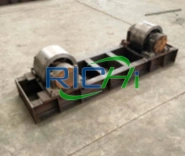
Support Rollers
Since this dryer operates on a rolling mechanism, support rollers must be installed. This bracket is made of sturdy cast steel and is highly wear-resistant. It provides stable support, ensuring the dryer operates smoothly.
Roller Ring
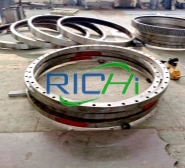
Roller Ring
These rollers also serve to support the drum and are typically arranged in 4 sets. They are made of cast steel and can be up to 15 mm thick. As a result, they offer greater hardness and wear resistance. They not only ensure the stable operation of the drum, but also guarantee production safety.
Drying Drum
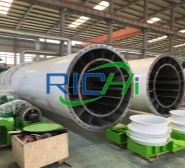
Drying Drum
The drum of this dryer is available in both single-layer and three-layer designs. Its rotation is controlled by a variable-frequency motor, with a speed range of 3–12 rpm. This allows you to adjust the speed based on the moisture content of the material. The shell is 8 mm thick and is designed to withstand high temperatures and resist wear.
Material-Lifting Plates
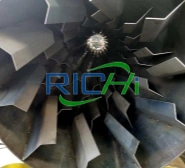
Material-Lifting Plates
These plates are mounted on the inner wall of the drum in a spiral pattern. They are installed on both the inner and outer sides of the three-layer drum. Each plate is 6 mm thick. They ensure thorough contact between the material and the hot air, thereby enabling more efficient drying. These plates are also made of wear-resistant material and are easy to remove and replace.
Fan
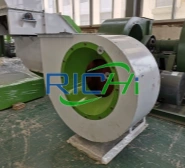
Fan
This unit is installed behind the hay drying equipment. It supplies airflow to the dryer, thereby lifting or discharging the material. Each fan is equipped with a filter to prevent material and dust from escaping. The fans used for three-layer drum dryers are larger in size.
Hot Air Furnace
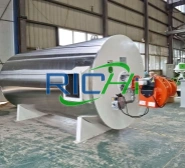
Hot Air Furnace
This unit provides a source of hot air for the dryer. It features a simple design and is typically constructed from firebricks and rebar. You can choose to build your own hot-air furnace to reduce investment costs. We also offer compatible burners that can use biomass such as waste wood and straw as fuel.
What raw materials can it process?
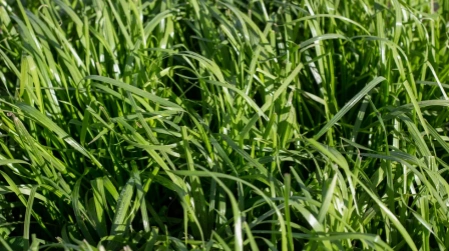
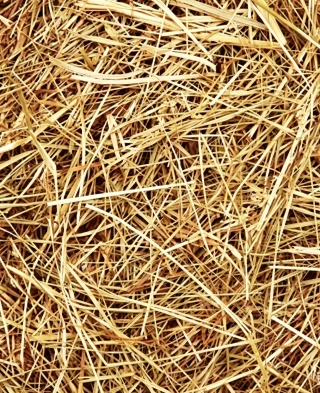
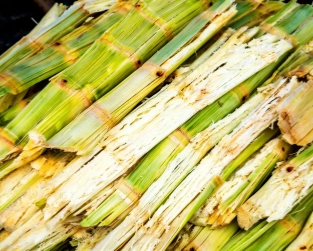
As an industrial hay dryer machine, it can process high-fiber materials with varying moisture contents, including fresh grass, hay, crop straw, and sugarcane bagasse. These materials must undergo preliminary crushing or bale-breaking before entering the dryer. For pelletizing, it is recommended to dry the material to a moisture content of 15–18%. This moisture level is optimal for pelletizing.



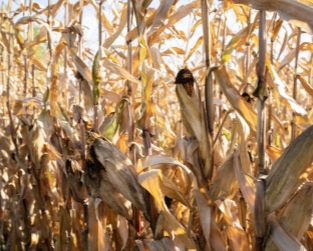
Global Cases of Hay Dryers
We provide hay drying solutions to customers worldwide. Our equipment has been exported to the United States, Brazil, Argentina, Australia, Uzbekistan, and many other countries and regions. Our offerings include standalone drying systems and grass pellet production lines. We can provide equipment solutions tailored to your specific needs.
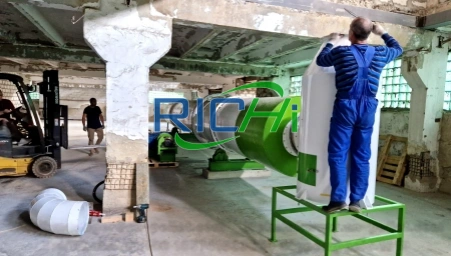

3-4 T/H grass Hay Dryer for Sale in Argentina
This is a grass feed line project. We supplied complete pellet equipment including a forage chopper, drum dryer, hay pellet machine, among others. The dryer is located between the chopping and pelletizing sections and dries the chopped alfalfa to 15% moisture content to optimize pelletizing results.
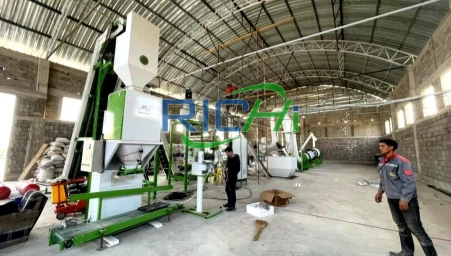

1-2 T/H Loose Hay Dryer for Sale in Uzbekistan
This customer needs to produce feed for ruminants. The raw material consists of 50–80% forage mixed with other grains. This dryer is a compact model with a small footprint. The customer chose to build their own hot-air furnace to meet the requirements for low-cost, high-efficiency production.
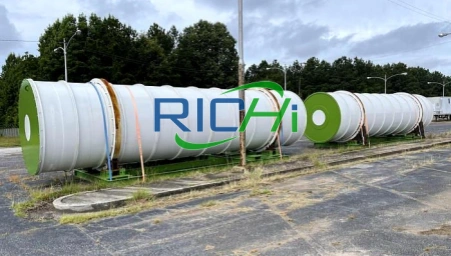

10 T/H hay dryer machine for Sale in USA
This is a turnkey solution for a grass pellet plant. The drying section is equipped with two three-layer drum dryers. They not only save floor space but also provide double the production capacity and highly efficient drying results. We also supplied alfalfa pellet machine for sale this pellet plant.
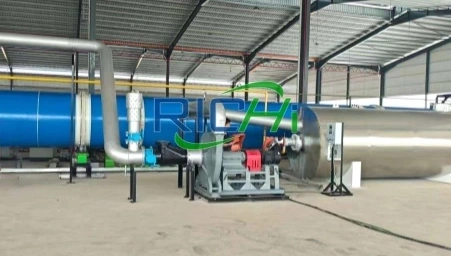

5-6 T/H Forage Dryer Machine for Sale in Brazil
This customer needed to dry forage and sugarcane bagasse for producing cattle and sheep feed. We provided them with a drum dryer, a hot air furnace, and a biomass burner. This solution supports both feed and fuel production projects, helping the customer convert resources and reduce production costs.
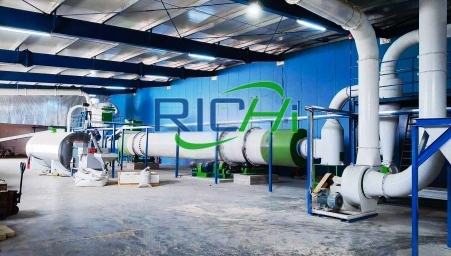

2-3 T/H Hay Drying Machine for Sale in Australia
Due to the hot local climate, seasonal hay shortages are common. This equipment helped a ranch solve its fresh hay storage issues. We also provided a forage crusher. The processed hay has a moisture content of 12-15%, which significantly extends its shelf life and thereby reduces feed costs.
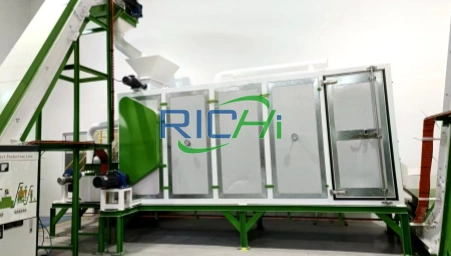

2–3 T/H Hay Dryer Machine for Sale in Thailand
This project involved drying sweet elephant grass for cattle and sheep feed. To preserve the nutritional structure of the sweet elephant grass, a belt type hay dryer was installed. The dried forage retains its original structure, offering excellent texture and nutritional value, and can be used directly as feed.
Applications of hay dryer
This dryer can be used in many drying scenarios, including forage processing plants, livestock farms, and grass pellet plants. It can be freely adjusted based on the characteristics of the raw material and your drying needs. We also offer many configuration options and customization services.

Complete hay Processing System
Due to the high fiber content of hay, it typically requires processing with a crusher. We offer bale breaker and forage chopper for sale. Placing the crusher before the drying system can significantly improve drying efficiency and directly meet pelletizing needs.
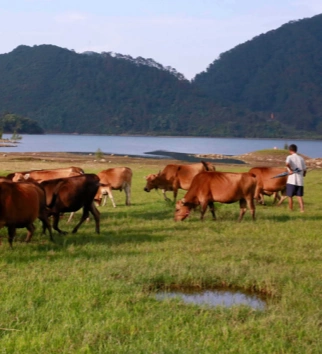
livestock farms
Harvested hay is prone to mold and difficult to store. Air-drying takes a long time and carries significant risks. Using a hay dryer can quickly reduce its moisture content, ensuring long-term feed storage on the ranch.
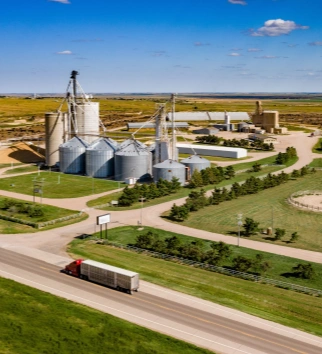
grass pellet plants
High-moisture hay can easily cause equipment blockages, reducing pellet quality and formation rates. This hay dryer machine can control moisture content at an ideal level of around 15%, enabling continuous production.
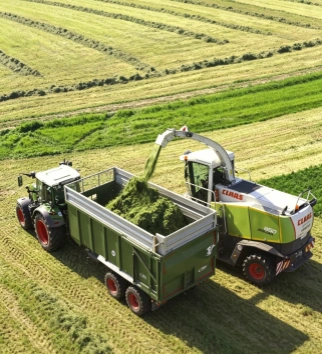
forage processing
For the forage processing industry in regions with high humidity, dryers are essential machine. They help rapidly dehydrate forage, supporting 24-hour continuous production to facilitate large-scale forage processing.

Service Programs
Personalized Services
About the hay dryer machine, we provide a range of specialized services. Through a combination of pre-sales and after-sales support, both online and offline, we ensure you have the best possible production experience.

Fast Shipping
We have set up a dedicated shipping system. Each dryer is shipped directly from the factory, which significantly reduces transit time.

Installation Guidance
Each shipment includes a specialized user manual and video tutorials, which help you quickly master the equipment.

Free Consultation
We offer free equipment consultation. Tell us your target production capacity and actual drying requirements, for tailored solutions and quotations.

Long-Term Warranty
Each hay dryer for sale comes with a one-year warranty, ensuring prompt and effective resolution for any quality issues.

Customized Solutions
For specialized materials and sizing needs, we deliver bespoke equipment customization to ensure optimal production outcomes.

Spare Parts Supply
We have established a global spare parts network system. Leveraging a national warehouse system, it enables rapid component delivery to minimize downtime risks.
Frequently Asked Questions
Below are answers to frequently asked questions about hay dryers. They cover the equipment’s applications and selection recommendations, as well as raw material processing standards. If you have any questions about this drying system, please feel free to contact us at any time.
Does forage need to be chopped before drying?
+
This mainly depends on the original condition of the forage and the type of dryer. For drum dryers, the raw material is typically required to be less than 3–10 cm in length. This effectively prevents the hay from tangling, which could affect the drying results.
Belt dryers can handle longer lengths of raw forage, generally around 10–30 cm. They preserve the forage’s original fiber structure. Therefore, pre-chopping is not necessary when using a belt dryer.
Is the hay dryer machine expensive to operate?
+
Our drying system is a highly efficient and energy-saving unit that effectively reduces operating costs. The equipment’s energy consumption primarily stems from heat source usage and operating duration. To meet energy-saving requirements, we recommend using a biomass burner. It provides heat by burning waste wood, straw, forage, and other materials. This can significantly reduce operating costs.
Additionally, drying high-moisture hay typically requires longer operating times, which correspondingly increases operating costs. Our equipment allows for flexible adjustment of drying duration, making it easy for you to tailor production to the characteristics of your raw materials and your specific needs.
Is the hay dryer machine suitable for small-scale production?
+
This dryer is a large-scale industrial machine with a production capacity ranging from 0.5–30 T/H. As such, it can meet the hay processing needs of small- and medium-scale operations as well as large-scale industrial production. For small-scale processing capacities of 1–2 T/H, we offer compact dryers that enable low-cost, high-efficiency drying.
Does drying hay destroy its nutritional value?
+
Excessively high temperatures can damage the protein structure in hay. Therefore, for drying hay-based materials, we recommend setting the temperature to around 60–90°C. If you need to use the hay directly as feed, we recommend a belt-type dryer. It effectively preserves the hay’s fiber structure and nutritional content. (View YouTube)
What is the difference between a rotary drum hay dryer and a belt type hay dryer?
+
The rotary drum dryer rotates the material, ensuring thorough contact with hot air. This enables efficient and rapid drying. With a high output per unit, it is suitable for industrial-scale hay processing and pellet production.
The belt-type hay dryer uses a hot-air circulation system. It allows the material to be spread evenly on a mesh belt, achieving gentle drying as the belt moves. This equipment is suitable for drying high-quality hay, maximizing the retention of its nutritional content.